
![Charles Leiper Grigg, ca. 1938 [St. Louis Post-Dispatch, February 13, 1966, p. 1G]](https://historicmissourians.shsmo.org/wp-content/uploads/2025/02/7-UP-Image-2-RESIZE-350x425.png "7 UP Image 2 - RESIZE")
Charles Leiper Grigg
Introduction
Charles Leiper Grigg was an entrepreneur from Prices Branch, Missouri. After developing a series of popular carbonated soft drinks, he eventually cofounded what would become the Seven-Up Company.
Early Years
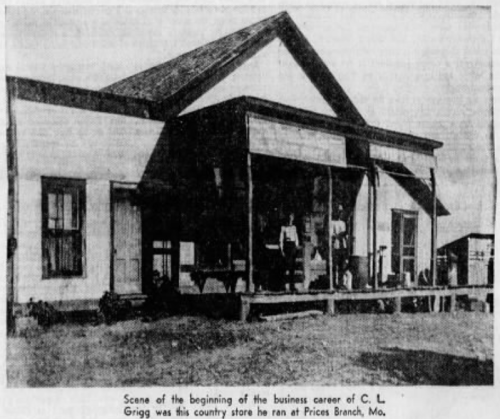
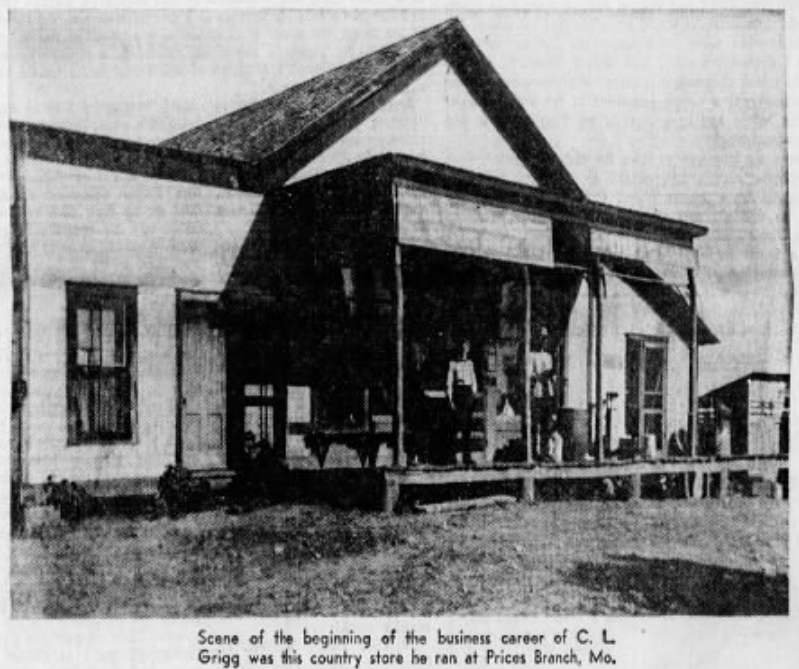
Charles Leiper Grigg was born in Prices Branch, Missouri, on May 11, 1868, to Charles L. S. Grigg and Mary Elizabeth Leiper Grigg. His parents managed the day-to-day operations of the family farm, and his father later served as a constable for Bear Creek Township in Montgomery County. After receiving an education at a local one-room schoolhouse, Grigg worked as a farmer until he began managing a general store with his brother, Hamblett Clark Grigg, in Prices Branch.
St. Louis Advertising
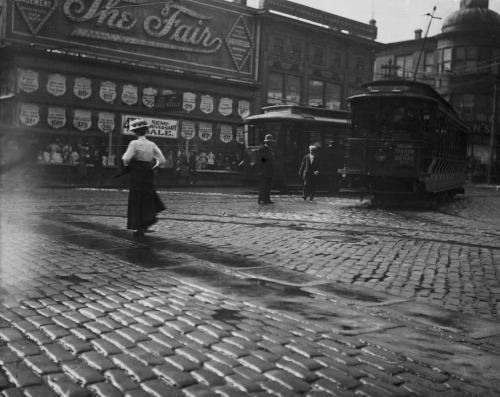
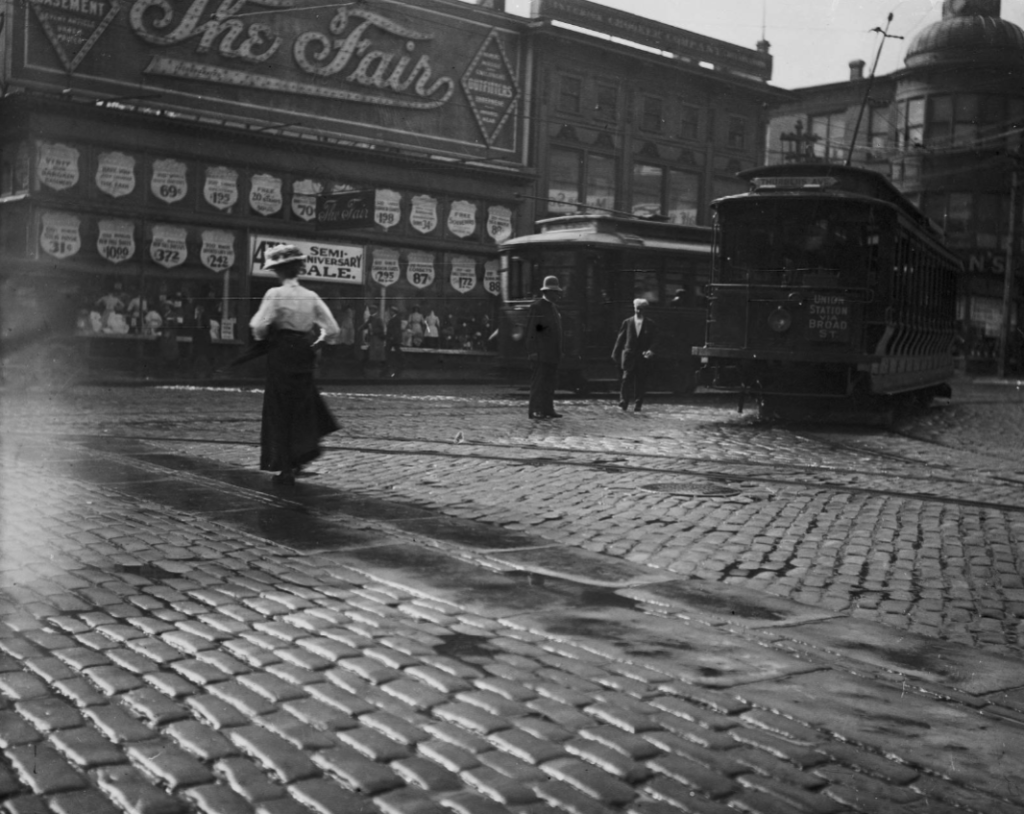
Frustrated with how companies marketed their products to customers and store owners like himself, Grigg moved to St. Louis in about 1904. Many people were drawn to the city at that time by the Louisiana Purchase Expedition, or World’s Fair, which was a gold mine for marketers and advertisers. Once in St. Louis, Grigg quickly found work in the advertising industry with companies such as Ely-Walker Dry Goods, Rice-Stix Dry Goods, Sharpleigh Hardware, Copper-Clad Malleable Range Company, and Fisher-Ruebel-Brown Advertising Company. He also became a member of the St. Louis Men’s Advertising League.
Howdy
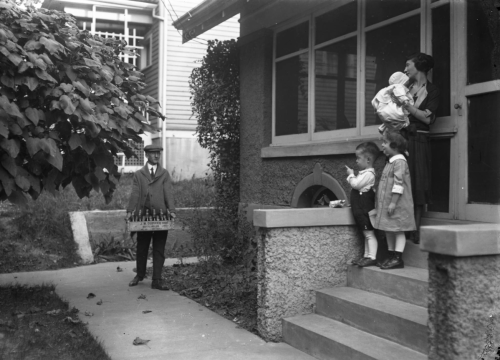
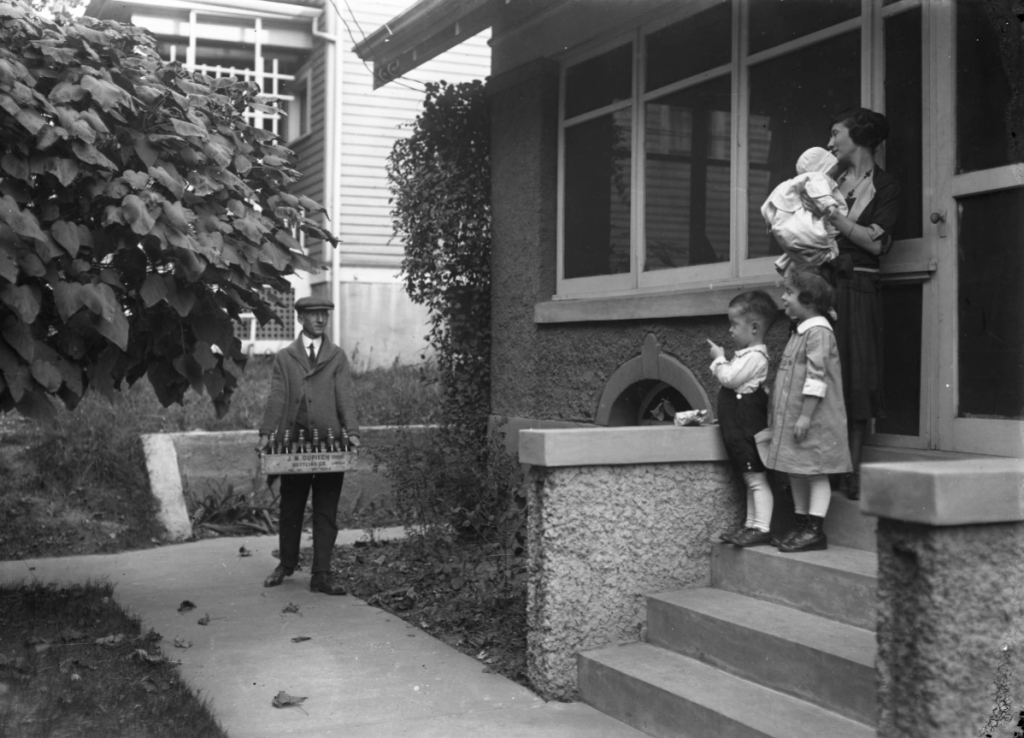
Within a few years, Grigg was working for the Orange Whistle Company, a soft drink manufacturer owned by Sylvester “Vess” Jones. Though Grigg was successful in marketing Orange Whistle, the company’s best-known soft drink, his relationship with Jones soured and he was fired in 1919. Grigg, along with Edmund Ridgeway, a local coal merchant, and Frank Y. Gladney, a lawyer, bought their own bottling plant. In 1920 they started the Howdy Company, named after its featured soft drink, Howdy, an orange-flavored soda. By the mid-1920s, Howdy had expanded beyond St. Louis and was manufactured and sold around the United States.
Seven-Up
By the end of the 1920s, following changes in laws governing soda manufacturing, Grigg steered the company toward producing a lemon-flavored soft drink. He approached Warner-Jenkinson, a local manufacturer of flavors and extracts, to help the Howdy Company develop the new soda. After several formulas were rejected, company officials finally agreed on the new drink in 1928. Though several ideas were suggested, Grigg is credited with naming the product Seven-Up, though he never revealed the origins of the name. The drink was marketed as a refreshing beverage that also helped with illness and headaches.
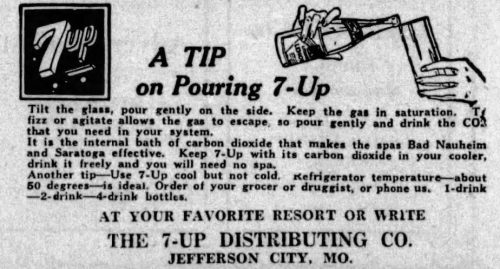
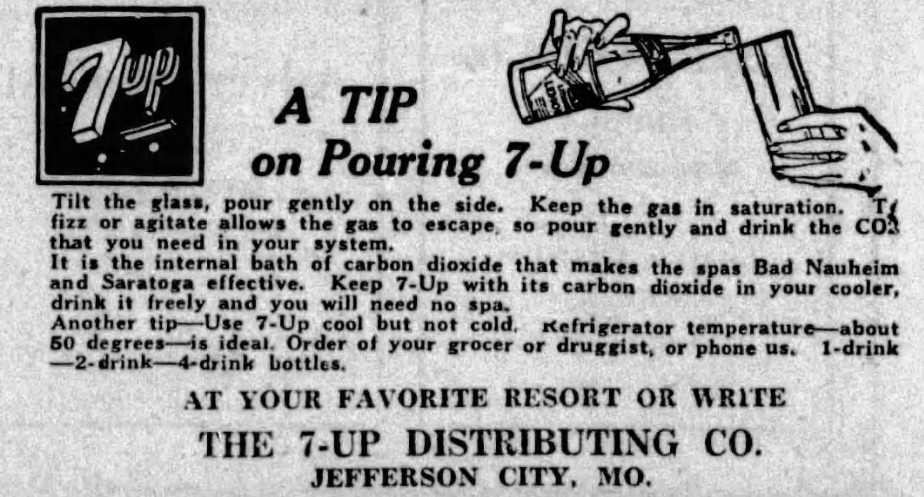
Capitalizing on the previous success of Howdy, Grigg used the same network of salespeople and bottlers to mass-produce Seven-Up. The company stressed consistency in flavor and product quality. In the mid-1930s, Grigg, Ridgeway, and Gladney combined the different products within their growing soft drink empire under a single name, and Howdy Company, Howdy Bottling, and Howdy Seven-Up Company all became part of the Seven-Up Company. By the end of the decade, Seven-Up bottling plants could be found in every state in the United States, and the drink was marketed and sold around the country.
Family Business
The Seven-Up Company soon became a family business with deep ties to St. Louis. Grigg quickly hired his brother and former store partner Hamblett to work with him. Hamblett, who had served in the Missouri legislature from 1910 to 1913, brought political connections with him. He stayed with the Seven-Up Company into the 1950s.
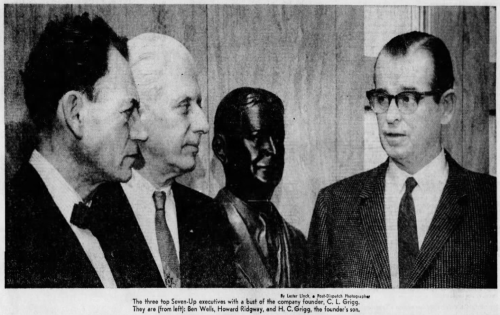
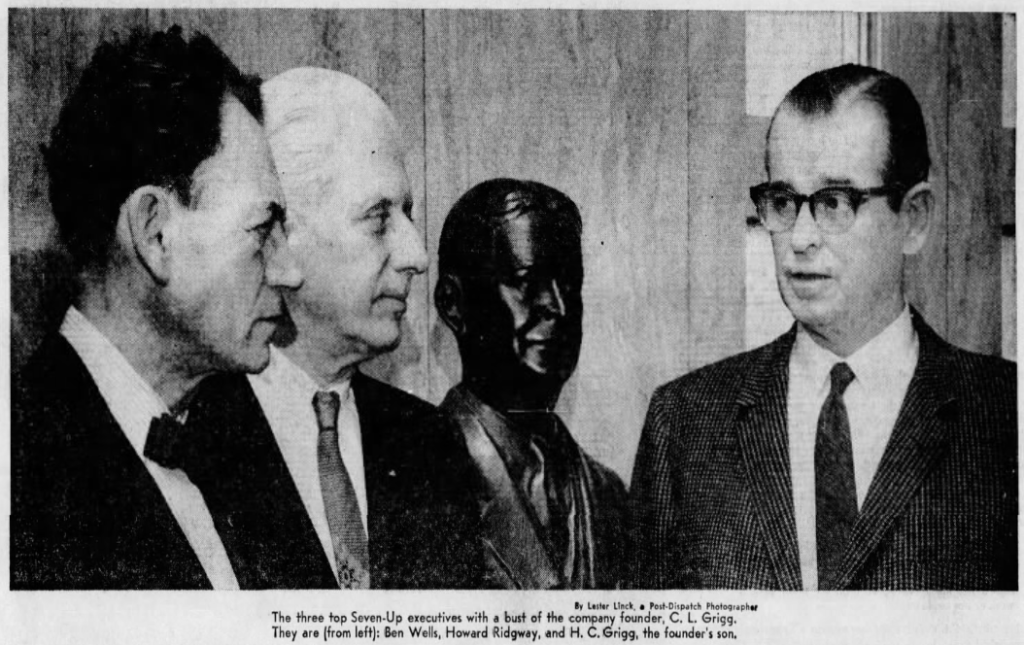
Hamblett Charles Grigg, Charles Grigg’s son, shared his father’s interest in marketing and advertising. After completing coursework at Washington University and working for an advertising sign company in St. Louis, he joined what was still the Howdy Company in 1929. Ben Wells, a son-in-law of cofounder Frank Gladney, joined the company in 1936 as an advertising agent. Wells became the company’s president in 1965 and chairman emeritus in the 1970s. Howard Ridgeway, the son of cofounder Edmund Ridgeway, eventually became the Seven-Up Company’s executive vice president.
Legacy
Charles Leiper Grigg passed away on April 16, 1940, in St. Louis. His son, Hamblett Grigg, succeeded him as president of the Seven-Up Company. By the time Hamblett Grigg retired in 1965, Seven-Up had nearly 700 bottling plants in 60 countries around the world, a far cry from where the company had started in 1920. In 1978, the founding families of Seven-Up sold the company to Philip Morris, which in turn sold the company to Hicks & Haas and PepsiCo. In the late 1980s, Seven-Up merged with Dr. Pepper, another soft drink manufacturer, and this relationship continues to the present day.
Text and research by Sean Rost
References and Resources
For more information about Charles Leiper Grigg’s life and career, see the following resources:
Society Resources
The following is a selected list of books, articles, and manuscripts about Charles Leiper Grigg in the research centers of The State Historical Society of Missouri. The Society’s call numbers follow the citations in brackets.
Articles from the Newspaper Collection
- “$500 Million May Soothe Headaches at Seven-Up.” St. Louis Post-Dispatch. May 16, 1978. p. 10A.
- Aquino, Jorge. “It Took a Dash of Luck, a Pinch of Stubbornness to Make Seven-Up.” St. Louis Post-Dispatch. January 26, 1986. p. 8G.
- “Charles L. Grigg Dies; Head of Seven-Up Co.” St. Louis Star-Times. April 16, 1940. p. 2.
- “Drink Has Missouri Heritage.” Kansas City Times. May 17, 1978. pp. 1B, 3B.
- Evans, Kenneth. “A Wide Variety of Delicious Soda Drinks Including Dr. Pepper Supplied by 7-Up Distributers.” Jefferson City Post-Tribune. March 18, 1935. p. 8.
- “Hamblett C. Grigg Dies; Headed Seven-Up Co.” St. Louis Post-Dispatch. October 26, 1977. p. 4G.
- Rice, Jack. “Bubbling Over with Success.” St. Louis Post-Dispatch. February 13, 1966. pp. 1G, 7G.
- Brown, John W. Missouri Legends: Famous People from the Show-Me State. St. Louis: Reedy Press, 2008. [REF F508 B8132]
- Charles Trefts Photographs (P0034)
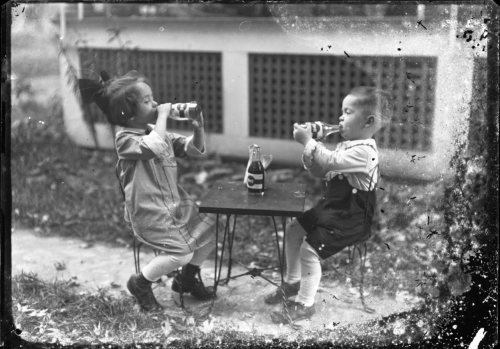
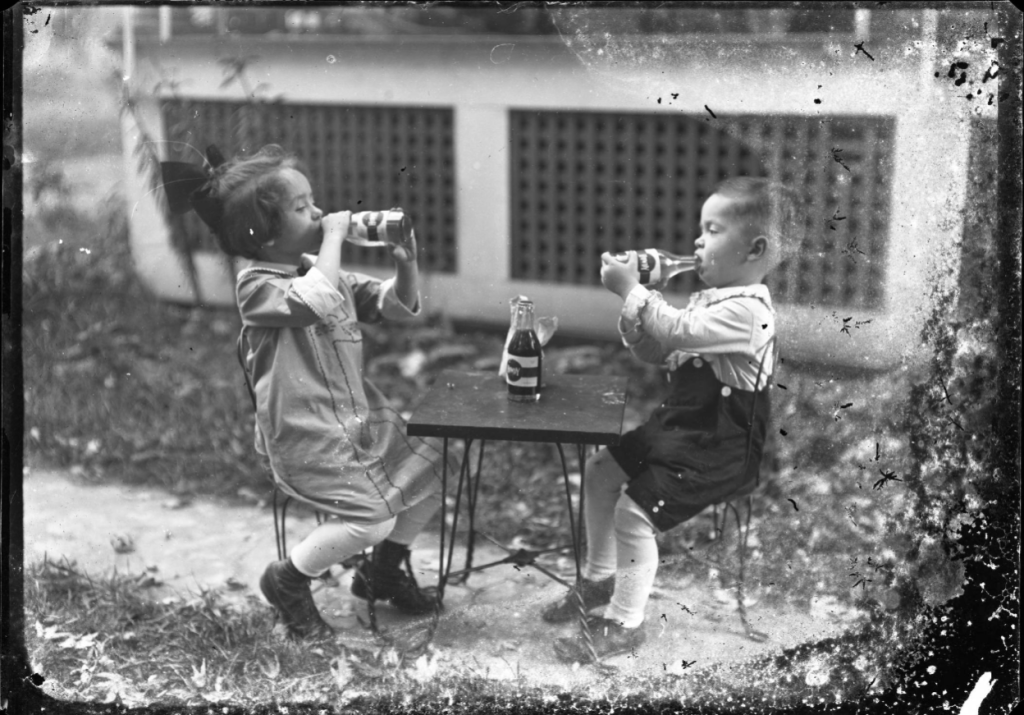
This collection contains images from 1900 to 1963 depicting St. Louis City and County people, public buildings, riverfront scenes, bridges, churches, catastrophes, houses and parks. The collection also includes promotional images from a “Here Comes the Howdy Man” series featuring Trefts’s children.
Outside Resources
These links will take you outside the Society’s website. The Society is not responsible for the content of the following websites:
- Society for Historical Archaeology
This website is hosted by the Society for Historical Archaeology and provides an article written by Bob Brown and Bill Lockhart about the history of the Seven-Up Company.