
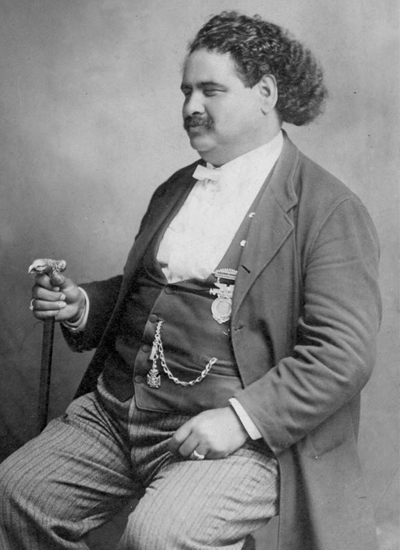
"Blind" Boone
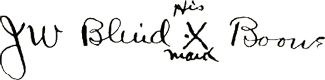
Introduction
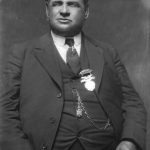
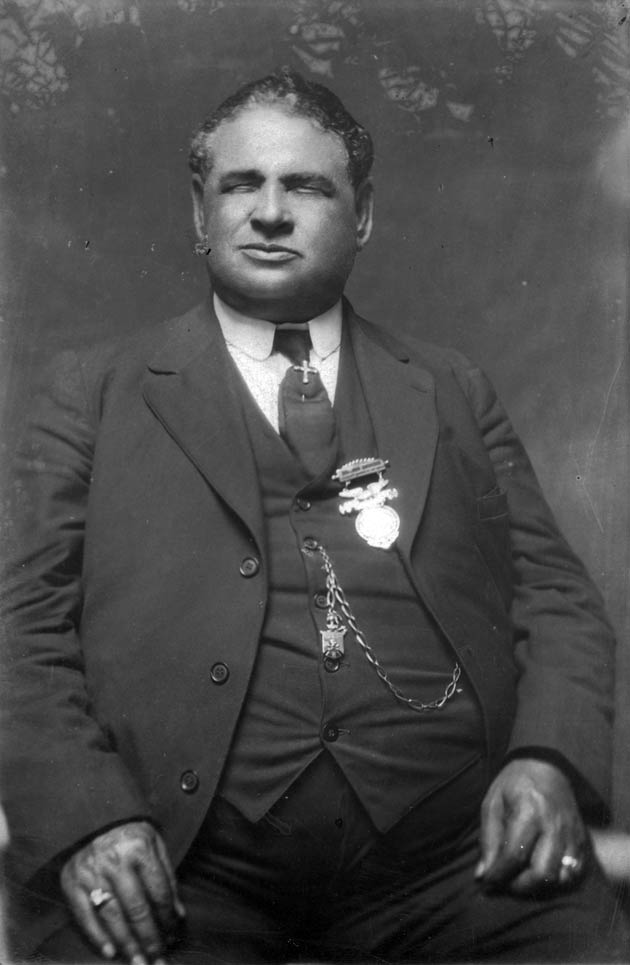
Born during the Civil War, John William “Blind” Boone overcame poverty, disability, and racism to become a nationally known composer and musician. Blind almost from birth, the musical prodigy created music using his knowledge of classical music, Negro spirituals, and the syncopated or “ragged” rhythms he heard in his everyday life. His music has influenced many later generations.
Early Years
On May 17, 1864, as the Civil War entered its final year, John William Boone was born in Miami, Saline County, Missouri. His mother, Rachel Boone, worked as a cook in the federal military camp of the Seventh Militia. She later told her son, whom she called Willy, that his father was a bugler in the army. Born into slavery, Rachel had either escaped or was freed by federal soldiers.
Rachel moved to Warrensburg with her infant son to work as a servant for various families. Around the age of six months, the baby developed cerebral meningitis or “brain fever.” The illness was often fatal, and the only treatment known at the time led to blindness. Doctors today would treat the illness with antibiotics.
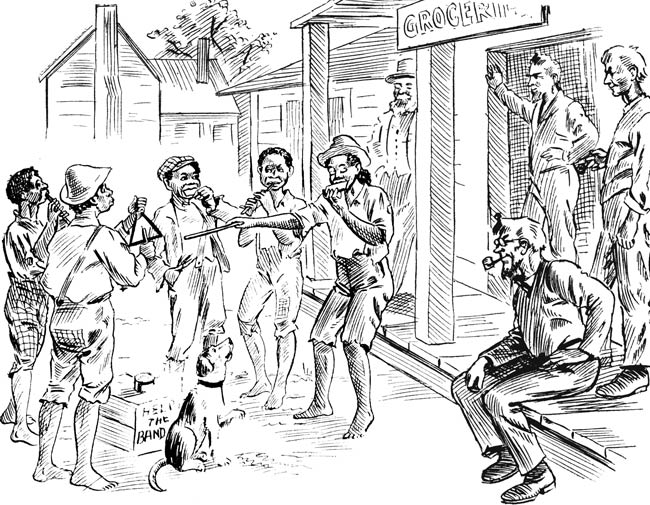
As Willy grew, the townspeople noticed his talent for music. They encouraged him with gifts of simple instruments, such as a tin whistle, a French harp (or harmonica), and a triangle. Willy started a band with his friends. They played for parades and special gatherings to earn money.

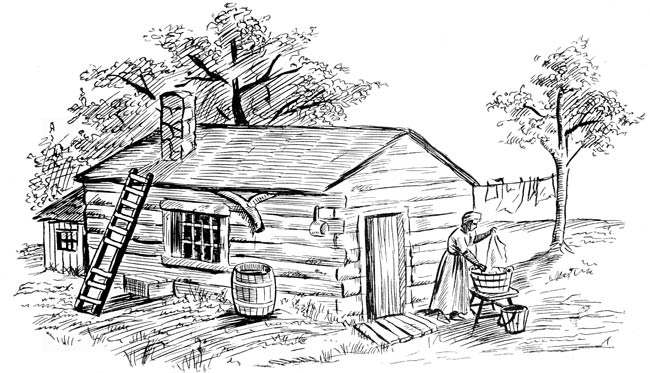

When Willy was about eight years old, his mother married Harrison Hendricks. Rachel and Willy moved into a one-room cabin with her new husband and his five children.
Education
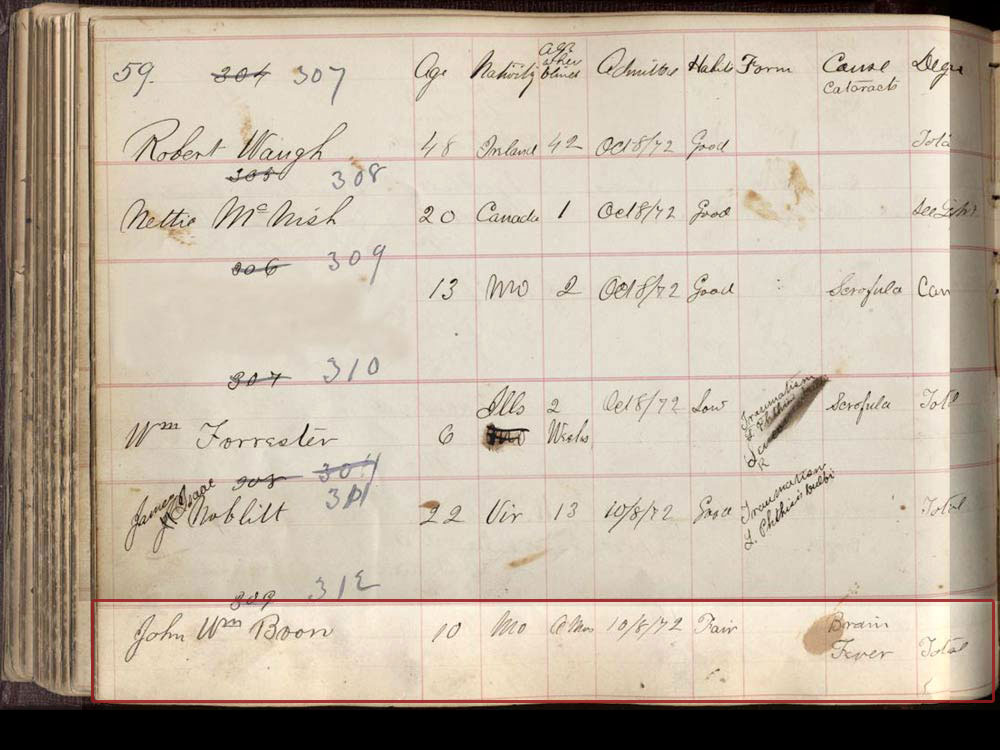
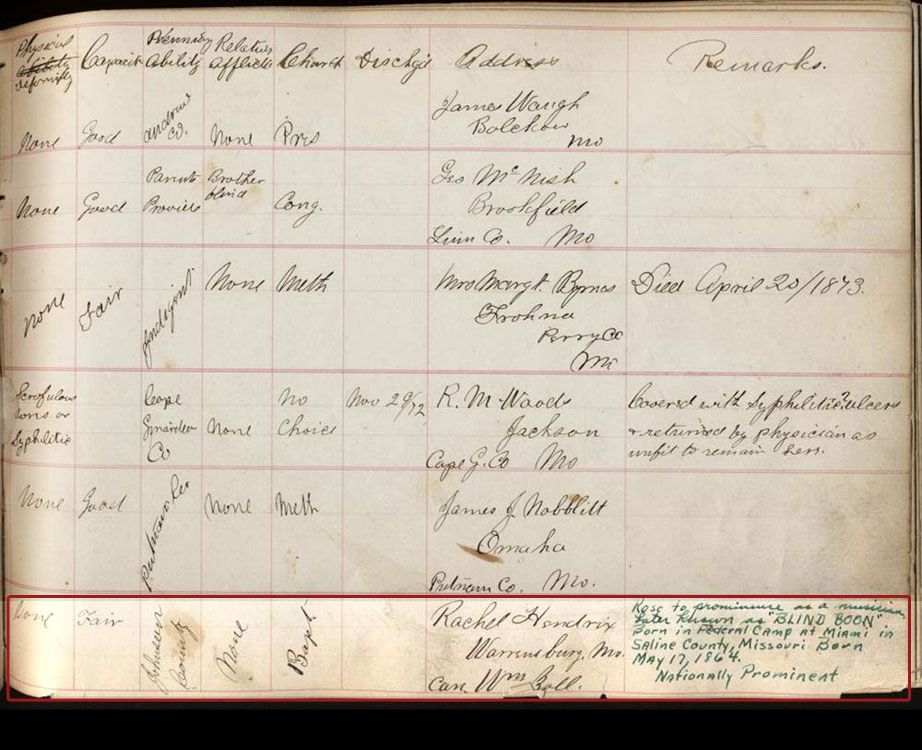
With his disability, Willy needed a special school. Several Warrensburg residents helped Rachel send her son to the Missouri School for the Blind in St. Louis. Former Missouri senator Francis Cockrell persuaded Johnson County officials to pay for the train ride to St. Louis and tuition at the school. A group of ladies helped sew the clothing Willy would need. In the fall of 1872, nine-year-old Willy traveled alone 225 miles to St. Louis.
Boone quickly learned to love the school. The program taught students skills to help them gain their independence and also emphasized music. The teachers tried to get Boone to study Braille and to learn the broom trade so he could support himself, but he was not interested in reading or making brooms. He would often steal away from his studies to listen to the advanced students as they practiced piano.
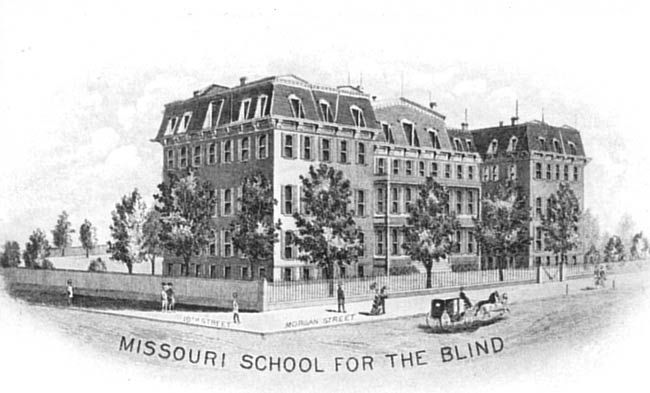
Enoch Donnelly, an older white student, appreciated the young boy’s curiosity and often invited Boone to hear him play. After he heard Boone mimicking one of his classical music pieces on the piano, Donnelly gave up a portion of his own practice time to teach the eager student. Boone could remember and play everything he heard, even if he had only heard it once.
Soon the young prodigy was entertaining gatherings at the home of the school superintendent. At home in Warrensburg during school breaks, Boone played piano for church services and social gatherings to earn money to help his family.
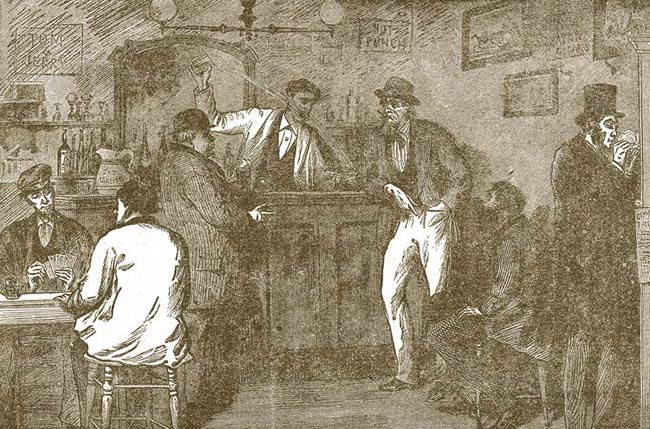
Once, upon his return from a school break, he found a new superintendent who did not believe Black students should have the same privileges as whites. He would not allow Black students to play piano. Unable to bear the new rules, Boone started skipping class to go to the “Tenderloin District” near the school. In the district, a poor and densely populated area, he listened to and played music with the African American musicians who worked in the saloons. The principal eventually dismissed Boone from the school because of his absences.
Ashamed to return to Warrensburg and face his mother, the young boy tried to make a living with his music in St. Louis. Eventually, broke and hungry, Boone returned home through the kindness of A. J. Kerry, a white railroad conductor. Kerry befriended the homeless boy and arranged for Boone to travel home on the train.
A Dark Period
Back in Warrensburg, Boone earned money playing piano for the Foster School, a white school, and again formed a band of street musicians. After hearing Boone play his harmonica, a local gambler named Mark Cromwell convinced the young boy he could supply him with concert engagements. Lured away from his mother by Cromwell’s tales and flattery, the young boy soon realized he would see none of the promised money.
Boone played his harmonica on the streets of many Missouri towns just as he had done in Warrensburg, but now Cromwell kept the money. At one point, the gambler lost Boone in a card game. The winner kept the boy in a locked room until Cromwell managed to “steal” him back three days later. Boone’s stepfather searched for the boy and finally brought him home. Throughout his life, some people tried to take advantage of the good-natured Boone.


Turning Point
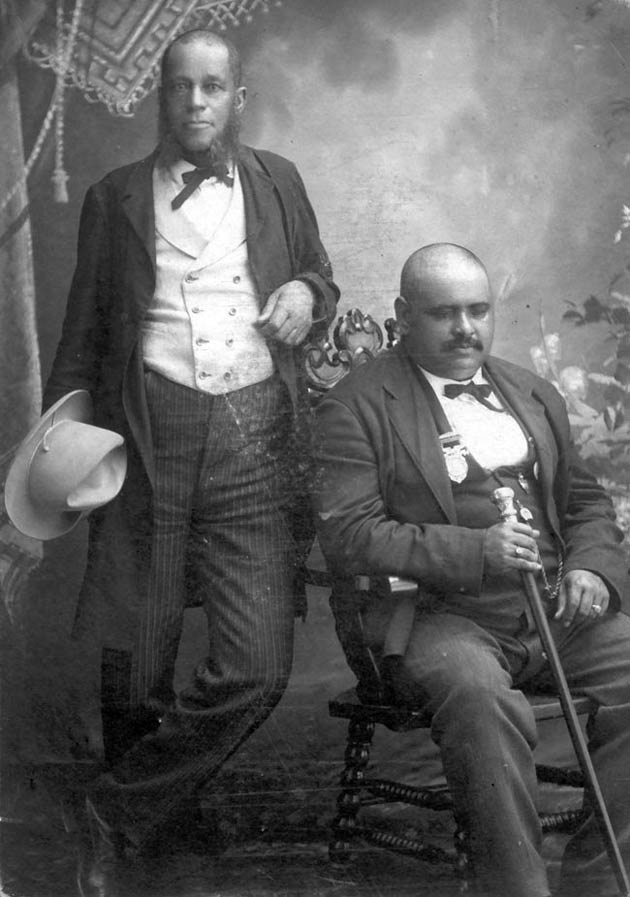
Boone met John Lange Jr. in December 1879. A contractor by trade, Lange owned an entertainment hall in Columbia and hired Boone to play the Christmas program there. He recognized Boone’s talent and also the young boy’s vulnerability.
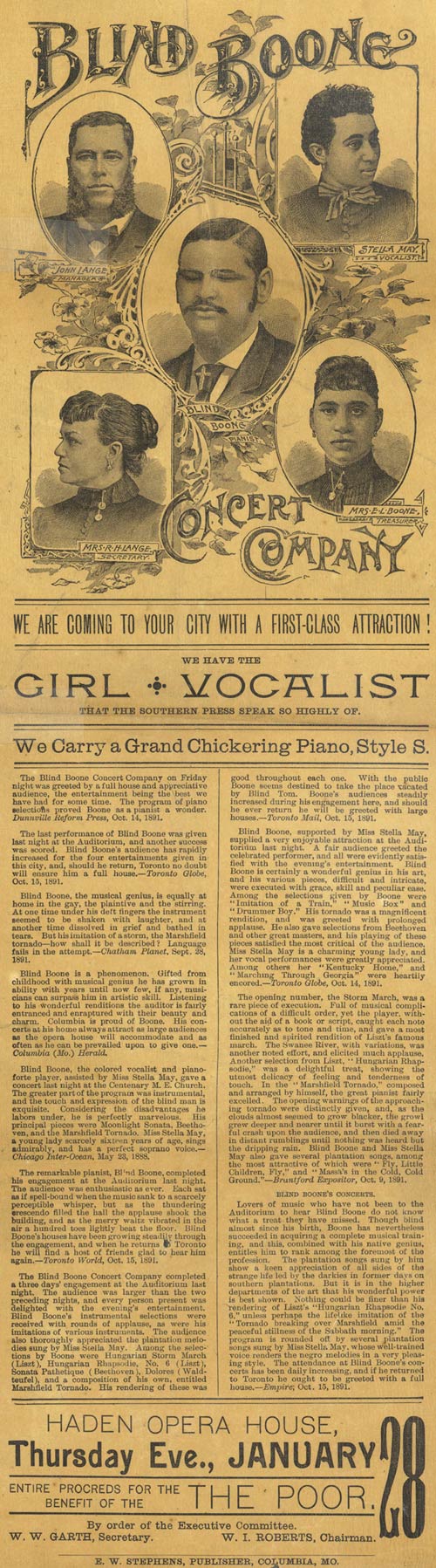
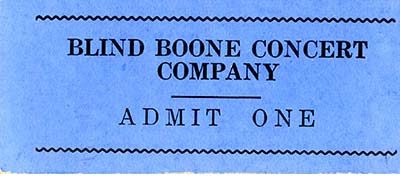
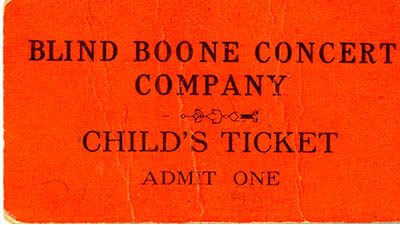
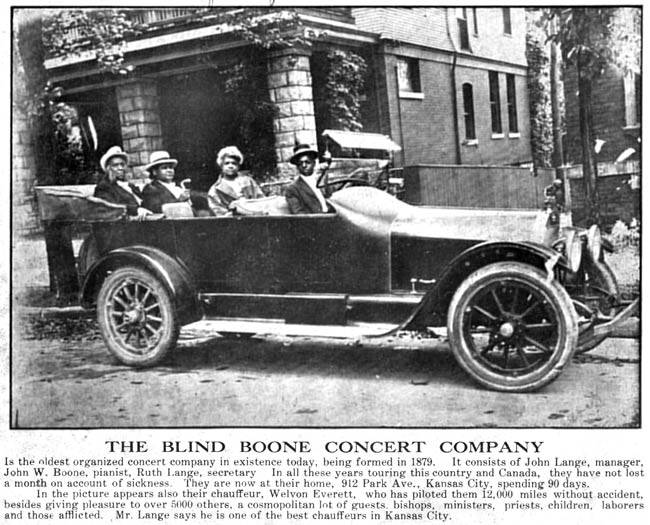
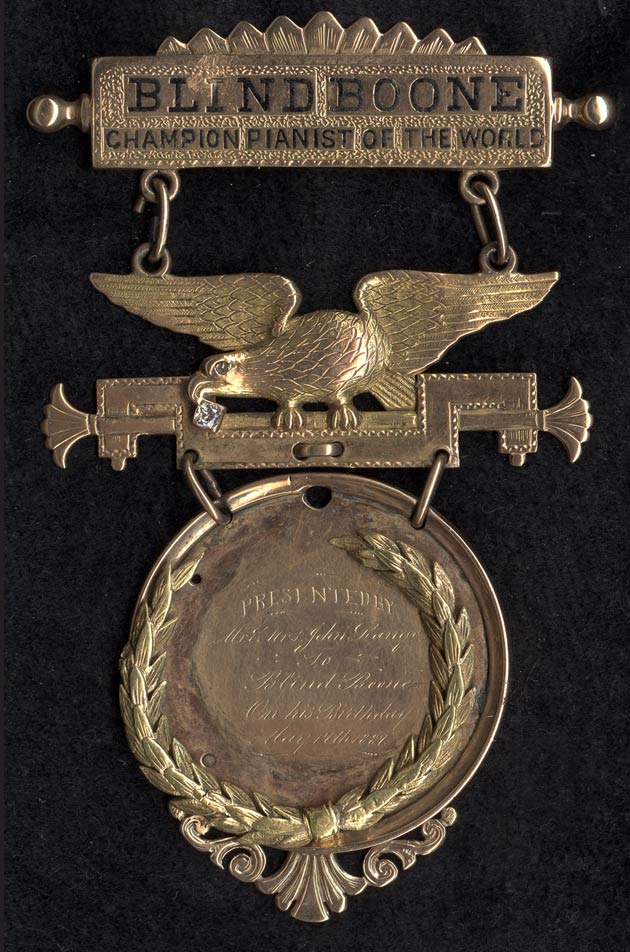
Lange wrote to Rachel Boone Hendricks to ask if he could take over the musician’s career. He promised to handle Boone’s training and care. The boy’s mother would receive part of his earnings every month until Boone turned twenty-one. When he turned twenty-one, Boone would become a partner in the Blind Boone Company. Lange kept his word. Boone played one of his first concerts as part of the Boone Company in January 1880. The ticket sales totaled a disappointing $7.00.
Thomas “Blind Tom” Wiggins came to play a concert in Columbia in March 1880. Like Boone, Tom could play any music he heard. As part of the program, his manager challenged anyone in the audience to repeat Tom’s tunes. Tom would play back any tune others played for him. Unlike many others before him, Boone was able to repeat Tom’s music note-for-note.
John Lange Jr.
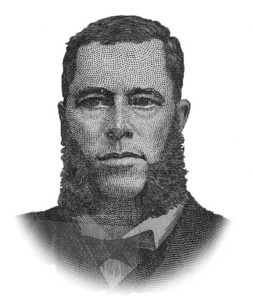
[John William “Blind” and Wesley Boone Papers (C2883)]
John Jr. worked in his father’s butcher shop and helped to build the first permanent black school in Columbia. He later became a public works contractor and supervised the construction of roads. Despite his lack of formal education, Lange became a successful businessman and respected community leader. He later learned how to read and write so he could manage the Boone Company records. Many would say that John Lange was the best entertainment manager of his time—Black or white.
Thomas “Blind Tom” Wiggins
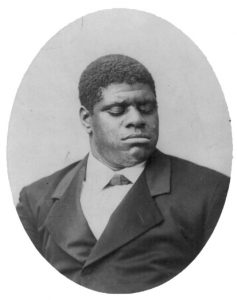
By the time Blind Boone played with Blind Tom, the latter was already nationally known.
Unlike Boone, Tom Wiggins could not learn piano technique from others and was unable to care for himself. He did not interact with others and today would probably be diagnosed as autistic.
Born into slavery, Tom Wiggins was retained by his enslaver, Colonel James Bethune, even after gaining freedom through emancipation. Bethune displayed Tom as a “curiosity” and made him play a grueling schedule of performances while pocketing the proceeds.
Early Struggles
The first few years Boone traveled with Lange, he was billed under the name “Blind John.” In addition to the fifteen-year-old Boone, a ten-year-old soprano named Stella May accompanied them. Lange often had to bring a good piano along in a wagon or by train because the churches and halls in the small towns where they played did not own one.

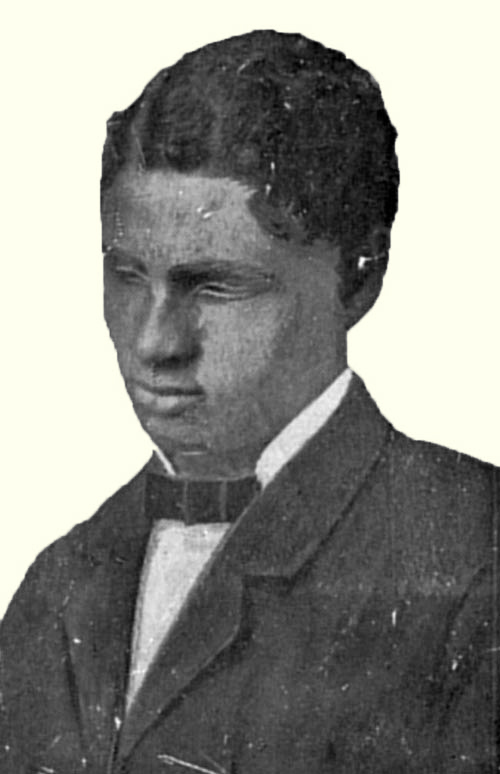
Just before Boone was scheduled to play in Marshfield, Missouri, a tornado hit the small town on April 18, 1880. The twister killed almost 100 people and injured twice as many. Few buildings other than the courthouse remained standing. Lange read Boone the newspaper articles reporting the tragedy. The musician was inspired to compose “The Marshfield Tornado,” which included effects that sounded like the tornado. After some discussion, Lange and Boone decided to continue on to the scheduled performance in Marshfield.
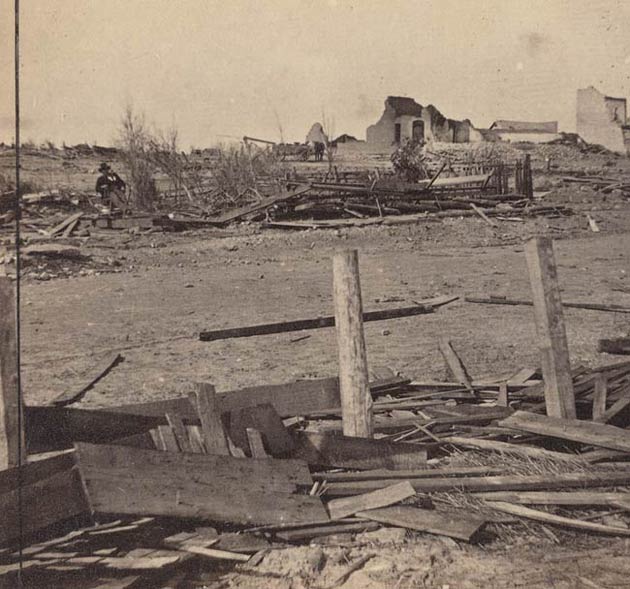

Many survivors of the tragedy came to hear Boone play. His first piece was the new cyclone composition. Much to the performer’s dismay, the true-to-life sounds of his music caused some to panic and flee the building, thinking another tornado was coming. Despite their own financial hardships, Boone and Lange donated the proceeds from the concert to help rebuild the town. “Marshfield Tornado” became a regular part of Boone’s program, but he always played it last in case it frightened his audience away.
Without the advantage of modern radio or television, word of Boone’s talent spread slowly. As the Boone Company struggled in its early years, Lange sometimes feared he would have to get a job digging coal to keep the company going. When funds ran low, Lange sent the other musicians home, and the two partners traveled the country alone. They were often broke and suffered many difficulties, such as hotel and music store fires and train wrecks. At one point, a business partner ran off with the company piano.
Although many of his friends believed he was foolish to give up his business to promote a little-known Black musician, Lange never regretted it. “I have lost all I had more than once, trying to make Boone a success, but I am proud today that I have stuck with it.”

Merit, Not Sympathy, Wins
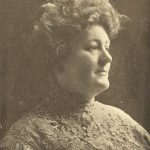

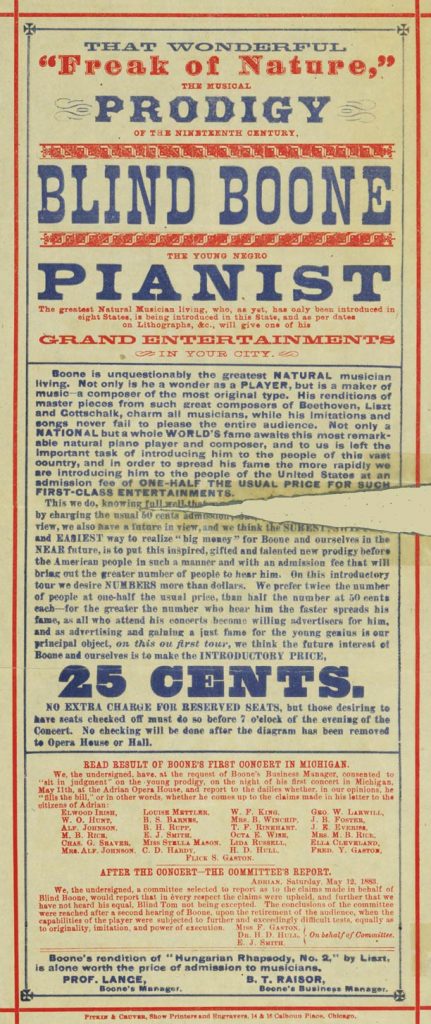
Blind Boone played piano by ear. Since he could not read music, he learned new songs by listening closely to other musicians. Around 1883 he took lessons from Mary R. Sampson in Cedar Rapids, Iowa. Sampson helped Boone acquire better piano technique and taught him new classical music pieces. After his work with Sampson, Boone’s career began to take off. It was around this time that the group began billing themselves as the Blind Boone Touring Company.
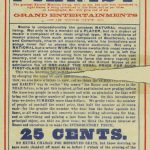
Lange wanted everyone to understand that Boone was a person of talent and achievement, not just a figure of curiosity and sympathy like Blind Tom. He developed the motto “Merit, Not Sympathy, Wins,” which was often printed on the concert program.
Boone played classical music to please one section of his audience and to demonstrate his skill. Then he would play popular music, folk tunes, and Negro spirituals to please another. He called this approach “putting the cookies on the lower shelf” so everyone could enjoy them. Like Blind Tom, Boone challenged his audience to play music for him to imitate.
Through a carefully constructed program of music, Blind Boone exposed his audiences, both Black and white, to the power of music. He developed a uniquely American sound by combining his classical training with his understanding of popular music. Boone was the first performer to unite these musical forms on the concert stage. Many believe his adoption of the “ragged” or syncopated rhythms of the African American community and the heavy bass line of his informal musical compositions inspired the development of ragtime music.
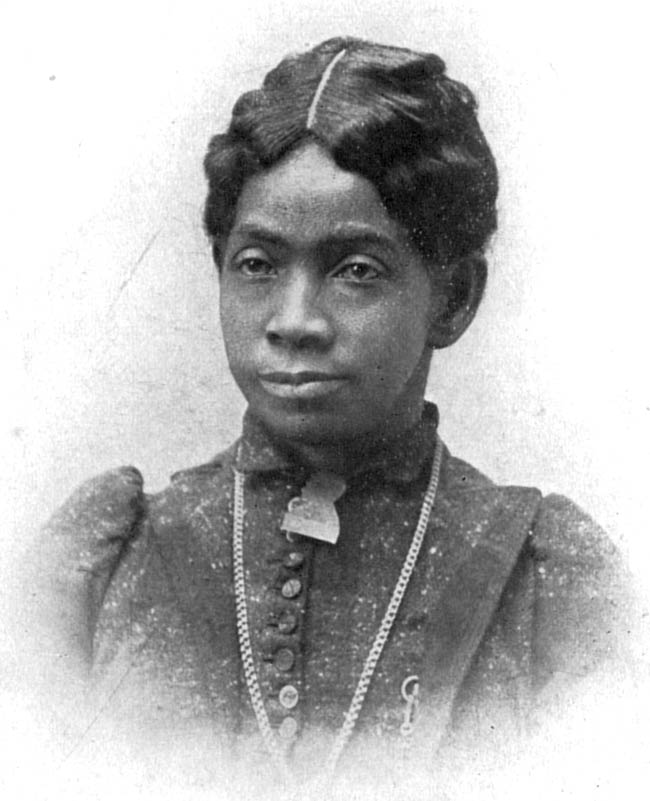
Melissa Fuell
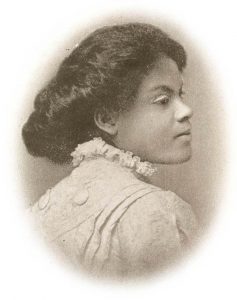
Near the end of her singing career and before she left the company to get married, Melissa Fuell wrote the only biography of Blind Boone published during his lifetime, Blind Boone: His Early Life and Achievements.
Without this biography, little would be known about Boone today.
Success at Last
With Boone’s new approach to his program, success came quickly. Black and white audiences alike came to hear Boone play and enjoyed his music. Prejudices still remained, however. In 1896 the United States Supreme Court upheld segregation laws as long as facilities and opportunities for both races were viewed as equal. In the concert halls, churches, courthouses, and tents where the Boone Company played, the white audiences and Black audiences usually sat apart or attended separate programs. Often the Black audience was restricted to the worst seats. Some white hotels refused to give the company members lodging, and there were often no Black-owned hotels in towns. Many times Black families offered the company their hospitality and put them up in their homes.


Recording Blind Boone
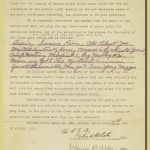
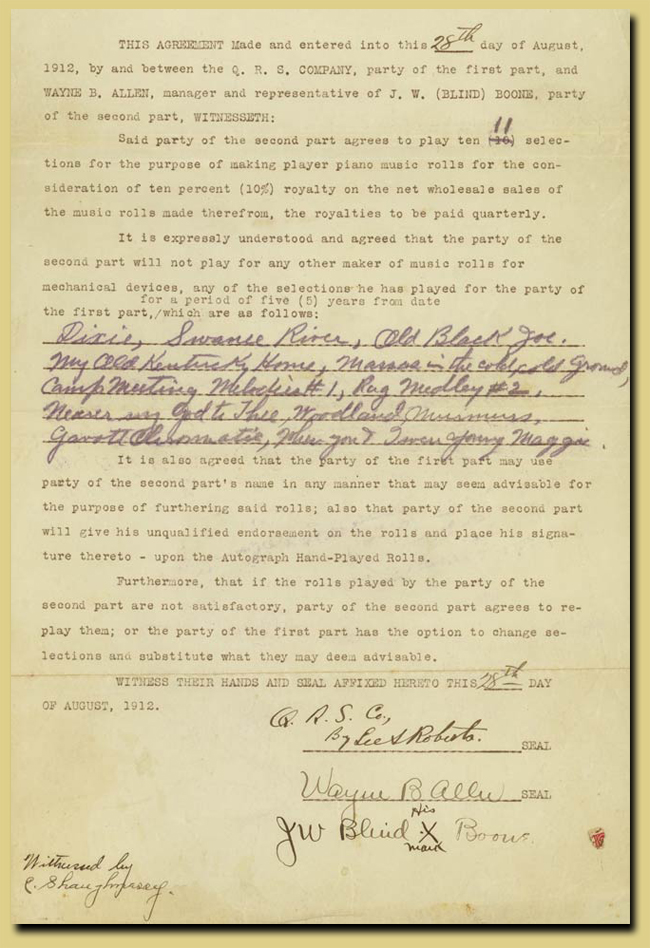
Blind Boone became one of the first Black artists recorded by the QRS piano roll company in 1912. He played eleven selections while a machine punched the notes on the roll. Boone’s ability to play many notes rapidly made it difficult to record him accurately. His best-known composition, “The Marshfield Tornado,” was never recorded or written down because it was too complex.
Gavotte Chromatic
 Boone approached his selection of music for the QRS recording much like he did his concert programs. It included several songs written by other composers, like Dixie , a song recognized as the anthem of the South, which would have pleased his often Southern audience, and a hymn, Nearer My God to Thee. Two of his classical compositions were also included, Gavotte Chromatic and Woodland Murmurs.
Listen to Gavotte Chromatic:
Camp Medley No. 1
 The most important recordings in the way of music history “firsts” are Camp Medley No. 1: Strains from the Alleys and Rag Medley No. 2: Strains from the Flat Branch. On the printed music, Strains from the Alley begins with these lyrics:
I got a chicken on my back, there’s a bulldog on my track But I’ll make it to the shack ‘fore day.
This theme and even these same words were used extensively in later blues lyrics. Boone was probably not the first to use them, but he was the first to have them published. Strains from the Flat Branch, which refers to Boone’s home neighborhood in Columbia, is said to be the first publication of a “boogie-woogie.” These two compositions would be played after Boone’s classical pieces, when he would announce he was “putting the cookies on the lower shelf for all to enjoy.”
Listen to Camp Medley No. 1:
Camp Medley No. 2
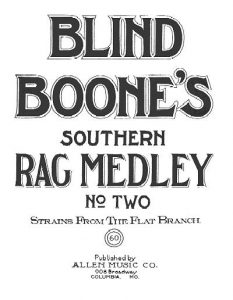 A musical medley is an arrangement made from a series of melodies joined together. Boone’s Ragtime Medley No. 2 is comprised of various popular songs of the day that would have been familiar to his audiences, including Carrie’s Gone to Kansas City, I’m Alabama Bound, So They Say and Oh! Honey, Ain’t You Sorry.
Listen to Camp Medley No. 2:
Thanks to the Blind Boone Park Renovation Group for use of the musical excerpts.
Home Life
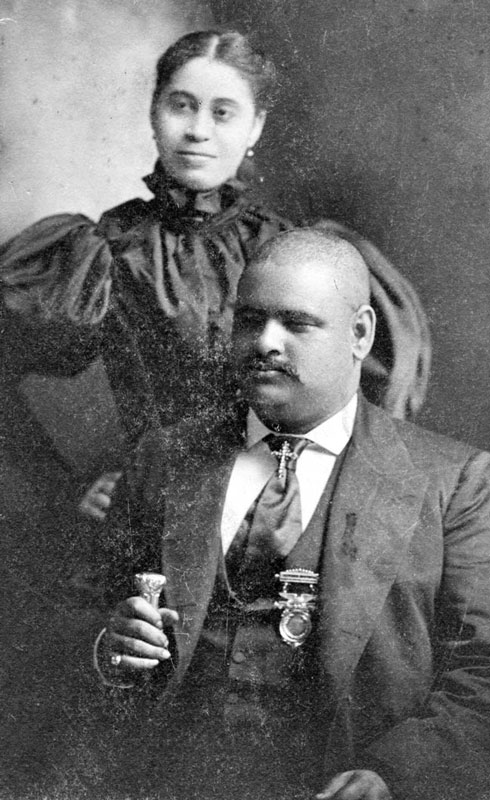

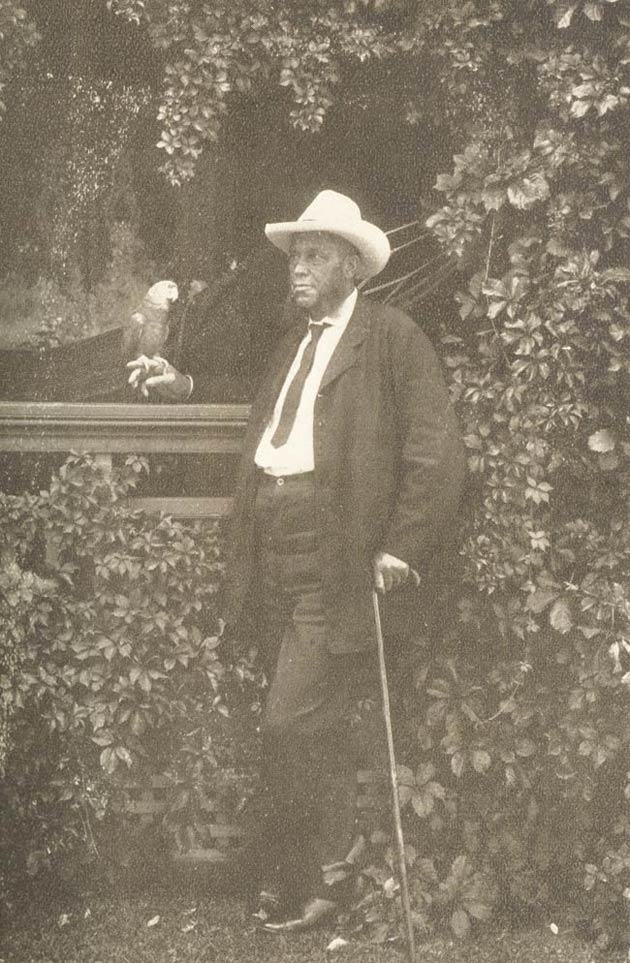
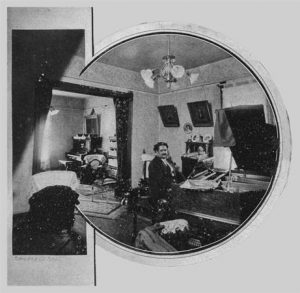
In 1889 Boone married Eugenia Lange, John Lange’s youngest sister. She traveled with the company for many years as treasurer and often read to her husband. Boone was especially interested in the geography of the country. With his excellent memory, he recalled all the railroad routes he had taken when young and the many places he had traveled.
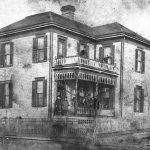
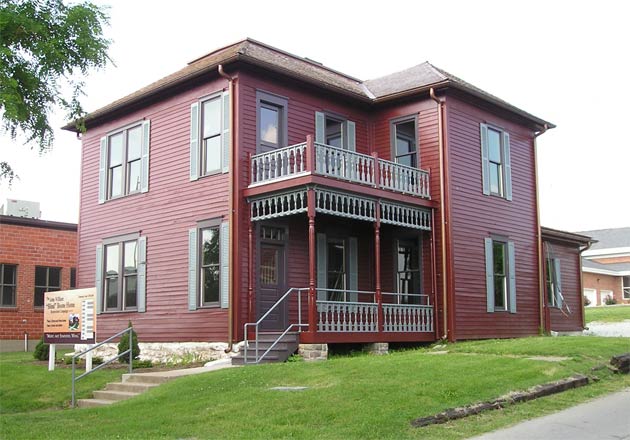
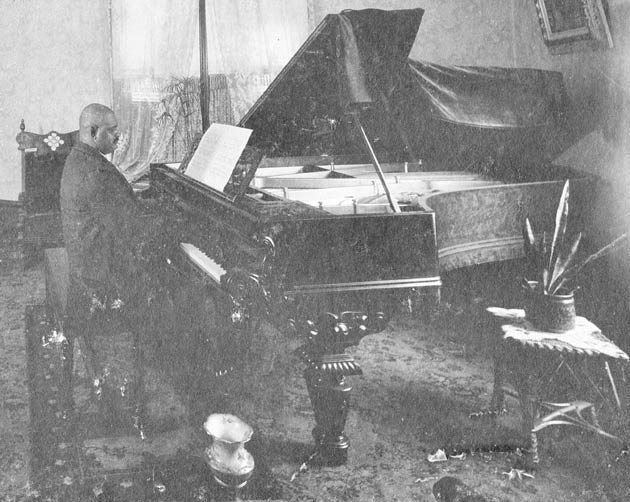
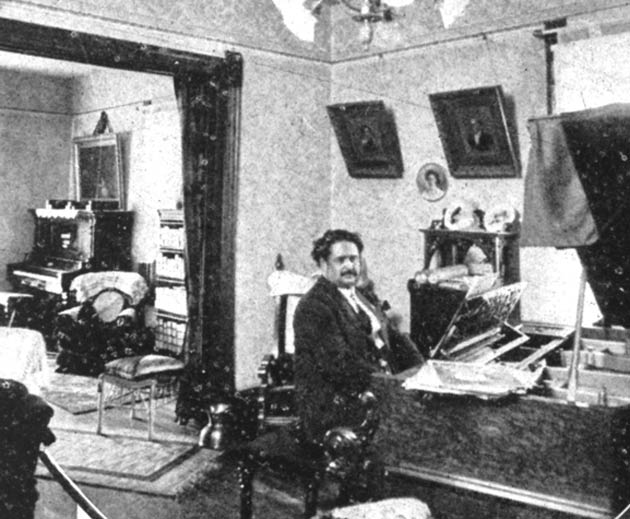
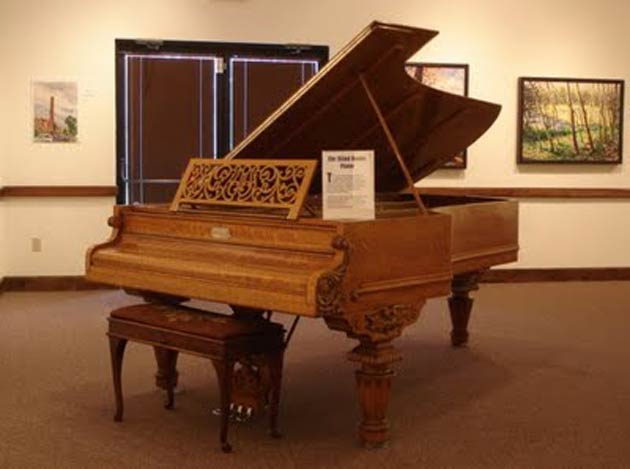
The young couple purchased a home at 10 North Fourth Street in Columbia. With Boone’s growing financial success, he was able to buy several pianos. Boone could play almost any instrument, but the piano remained his favorite. Often in the summer, when he was not on tour, he spent six hours a day practicing new music. Boone believed the only way to achieve greatness was through study and practice.
Blind Boone House

Boone's Other Talents and Traits
Once Boone met someone—child or adult—he always recognized the voice and remembered the name, even many years later. He also talked about his ability to “see” colors, often identifying the color of fabric or the hair on a child’s head through touch. Boone could describe the appearance of a person after hearing the sound of his voice. He called his ability “seeing with my mind.”

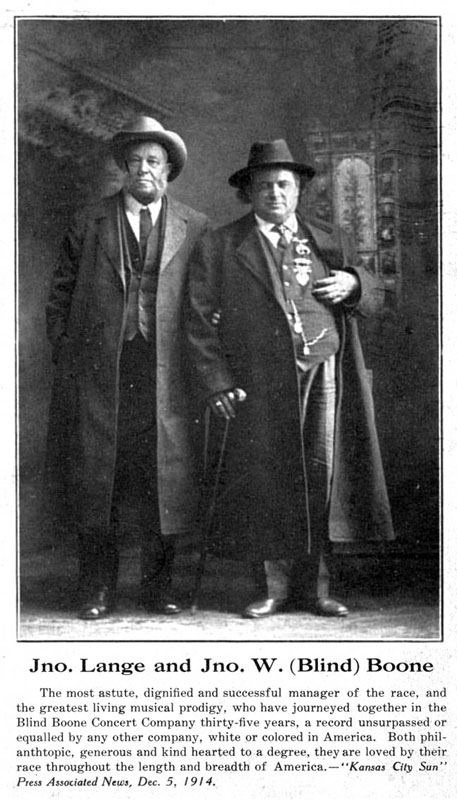
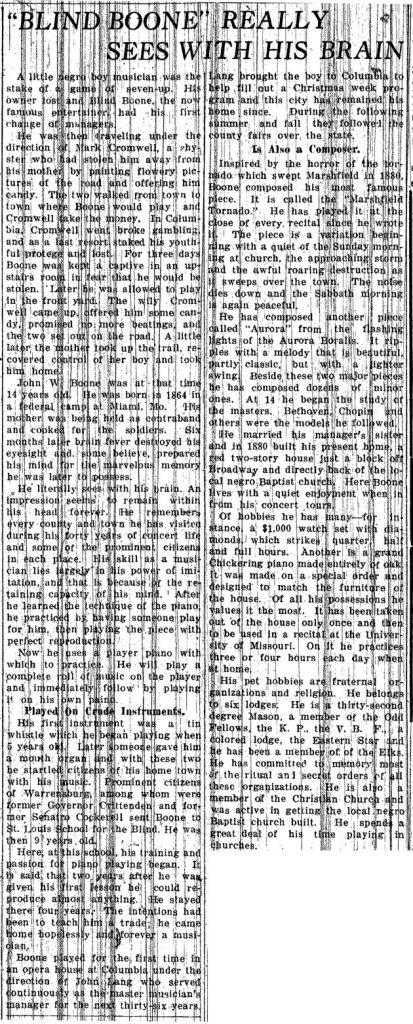
Like his partner John Lange, Boone was generous to those around him. He supported churches and other organizations through donations and loans. He provided loans to Christian College (now Columbia College) and the First Christian Church of Columbia. In gratitude, the church accepted Boone as their first Black member.
Once in Kansas, the members of the Boone Company were denied rooms at the only local hotel. An elderly relative offered them the use of her home. When Boone learned she had approximately $360 remaining on her mortgage, a large amount in those days, he paid off her loan. Lange often said, “Boone is charitable and I have been authorized by him whenever I see a deserving person in need of assistance to assist such person in his name.”
Despite many hardships, Boone never appeared down or sorry for himself. Toward the end of his life, he said, “Blindness has not affected my disposition. It has never made me at outs with the world. Many times I regard it as a blessing, for had I not been blind, I would not have given the inspiration to the world that I have. I have shown that no matter how a person is afflicted, there is something that he can do worthwhile.”
The End
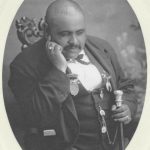


After seeing his protégé achieve success, John Lange died in 1916 at the age of seventy-six. Boone hired several managers in succession to take Lange’s place, but never found a replacement for his longtime friend. He continued to tour and practice with the same rigorous schedule. In January 1926 Boone played two live performances at the KFRU radio station in Columbia, Missouri. The Columbia Tribune reported that the programs were the most popular ever heard on the station.
John William “Blind” Boone retired in June 1927 after completing forty-seven touring seasons. His health had gradually declined, and he planned a trip to a health spring in Arkansas. Shortly before he left in October of that year, he stopped in Warrensburg to visit his stepbrother, Samuel Hendricks. While there Boone suffered a heart attack and died at the age of sixty-three.
After his death, Boone’s estate contained only $132.65 and his house in Columbia. The nationally known and beloved musical genius was buried without a marker in the black section of the Columbia cemetery.
"Blind" Boone's Legacy
With the growing popularity of jazz, Boone’s music was soon forgotten. While ragtime musicians kept Boone’s rag compositions and history alive within their sphere, as time passed, few remembered the name that was once a household word.
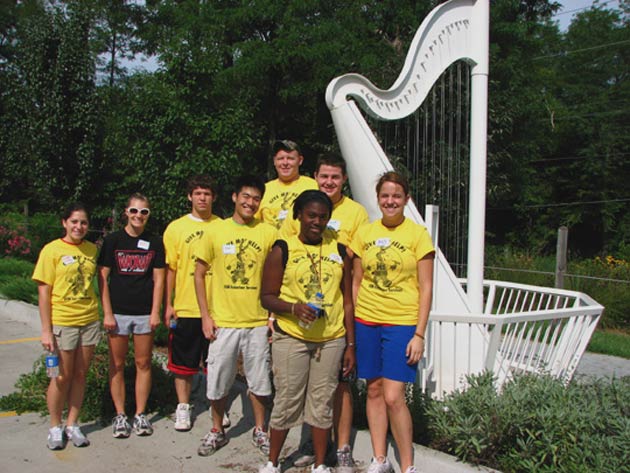
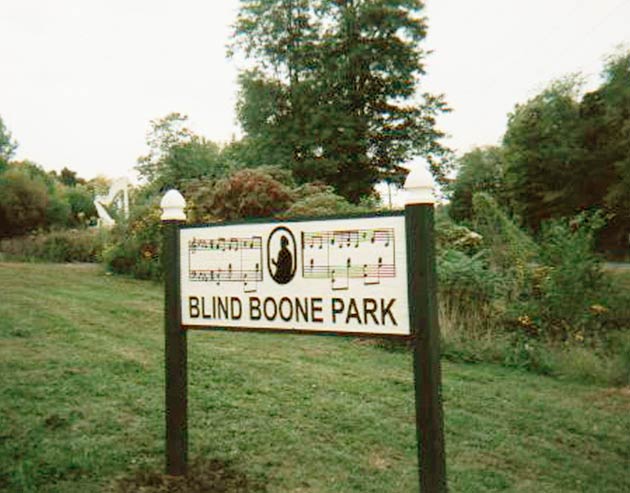
Since the mid-1950s, however, momentum to reestablish Boone’s place in music history has grown. A park in Warrensburg now bears his name. In 1961 the Blind Boone Memorial Foundation formed in Columbia and gave a concert of Boone’s music at the University of Missouri. The Columbia-Boone County Sesquicentennial Commission erected a tombstone on Boone’s grave in 1971 forty-four years after his death.
Boone’s home in Columbia is on the National Register of Historic Places and is being restored through the efforts of the John William “Blind” Boone Heritage Foundation. His Chickering piano can be seen at the Boone County Historical Society in Columbia. An annual ragtime festival in Columbia bears Boone’s name.

Text and research by Christine Montgomery with assistance from Mike Shaw
References and Resources
For more information about John William “Blind” Boone’s life and career, see the following resources:
Society Resources
The following is a selected list of books, articles, and manuscripts about John William “Blind” Boone in the research centers of The State Historical Society of Missouri. The Society’s call numbers follow the citations in brackets.
Articles from the Missouri Historical Review
- Gentry, North Todd. “Blind Boone and John Lange, Jr.” v. 34, no. 2 (January 1940), pp. 232-234.
Articles from the Newspaper Collection
- “Blind Boone.” Jefferson City Daily Tribune, April 27, 1898. [Reel # 17256]
- “Blind Boone and His Life Story.” Columbia Tribune, July 25, 1912. p. 1, 3. [Reel # 8145]
- “Blind Boone Closes Forty-Fourth Season on Musical Platform.” Columbia Missourian, June 3, 1924. [Reel # 7591]
- “Blind Boone Dies at Warrensburg.” Columbia Tribune, October 5, 1927. p. 1. [Reel # 8178]
Books
- Barile, Mary and Christine Montgomery, eds. Merit, Not Sympathy, Wins: The Life and Times of Blind Boone. Truman University Press, 2012. [F508.1 B645bar]
- Batterson, Jack. Blind Boone: Missouri’s Ragtime Pioneer. Columbia: University of Missouri Press, 1998. [F508.1 B645ba]
- Christensen, Lawrence O., William E. Foley, Gary R. Kremer, and Kenneth H. Winn, eds. Dictionary of Missouri Biography. Columbia: University of Missouri Press, 1999. pp. 102-103. [REF F508 D561]
- Fuell, Melissa. Blind Boone, His Early Life and His Achievements. Kansas City, MO: Burton Publishing Co., 1915 [REF F508.1 B645f]
- Harrah, Madge. Blind Boone: Piano Prodigy. Minneapolis, MN: Carolrhoda Books, 2004. [F508.1 B645ha]
Manuscript Collection
- Blind Boone Heritage Foundation, Collection, (C4487)
Materials pertaining to musicians John W. “Blind” Boone and “Blind” Thomas Green Wiggins Bethune. Includes biographical material, publicity items, contracts, correspondence, clippings, programs, royalty statements, photographs, piano rolls, sheet music, and audio recordings. - Blind Boone Memorial Foundation, Inc., Papers, 1886-1976 (C3664)
This collection includes some of the William “Blind” Boone’s compositions, orchestrations and choral arrangements. The papers also contain correspondence, programs, and posters from a memorial concert. - Boone, John William “Blind” and Wesley, Papers (C2883)
Publicity poster announcing the appearance of Blind Boone in Columbia, MO. Program of piano concert of Little Blind Wesley, nephew of Blind Boone. - Boone, John William “Blind” (1864-1927), Piano Roll (C4758)
Performance by Blind Boone of “Nearer My God to Thee,” published by the QRS Company, c. 1920.
Outside Resources
These links, which open in another window, will take you outside the Society’s website. The Society is not responsible for the content of the following websites:
- “Perfessor” Bill Edwards
Listen to two songs composed by Blind Boone and performed by “Perfessor” Bill. - Piano Roll Production at QRS Music
Watch how piano rolls are made and see a player piano in action.